Mrs. Dove's Agricultural History Webquest
  • An Introduction
  • Task
  • Early Agriculture
  • Ag in the US
  • Look at Specific Markets
  • The Numbers Game

Ag In The US

Two significant trends occurring in the agricultural sector during the past century involved the increased use of machines and government price supports. These factors combined to encourage operators to increase the size of their farms and gain efficiencies.

History of the Tractor Video

Growth of An Industry

The purchase of farm inputs, such as machinery, required an increasing amount of capital and fewer individuals were willing or able to take on the debt necessary to farm. Large cash outlays for farm equipment increased specialization, and operators began producing larger quantities of a limited number of products. As a result, fewer farms were needed to meet the demand for agricultural products.  Total farm and ranch acreage increased steadily during the first half of the 20th century, due in large part to development in the Great Plains and Far West where land policy encouraged continued conversion of large tracts of arid government lands to agricultural uses.

Farm Labor

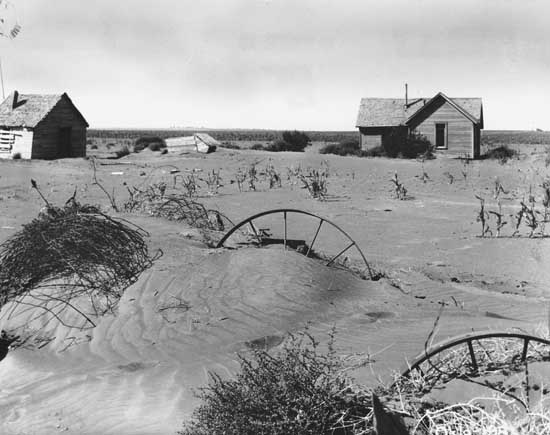
Farm labor requirements declined steadily due to mechanization, economic conditions, and the western expansion of agriculture coming to an end.  The increased use of machines to perform work formerly done by humans and then by animals raised farm efficiency while reducing the need for farm labor. The Great Depression left many farm laborers unemployed until the economic boom during World War II created employment opportunities in urban centers and led to a large migration from rural areas.

Mechanization

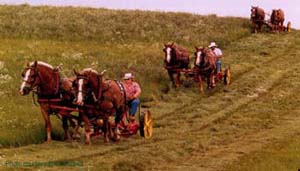
Technological advances in the early part of the 20th century centered around mechanical innovation and improvements. Farmers were constantly looking for more efficient and reliable sources of power to run their farm operations. As a result, machines gradually replaced horses and mules on the farm. The steam engine was in use early in the century, but proved to be too expensive and cumbersome for most farmers. A cheaper and smaller alternative to the steam engine was desired.

The gasoline-powered tractor was developed to fill this need and farmers began adopting this technology around 1910. The early tractors were quite large and were still not practical for smaller farms. As a result, the widespread use of tractors did not take place until lighter and less expensive tractors became available around 1915.

Improvements in design during the 1920's allowed farmers to use tractors during cultivation in addition to plowing, further increasing their appeal.

Soybeans and Oats

The technological changes that took place in agriculture during the 20th century have caused some major shifts in crops grown on farms. Among the most dramatic of these changes is the decline of land devoted to oat production and rise in soybean acreage. Oats were a major crop dating from colonial days because of their importance as a livestock feed grain, particularly for horses and mules.  The early popularity of soybeans was due to their nitrogen-fixing properties and conservation uses.  Now we find soybeans used in many products.

Shift in Improvements

The use of the internal combustion engine was not limited to tractors. Farmers began to make full use of other machinery, such as trucks and self-propelled harvesting equipment that was being developed in the first half of the century. The manufacture and use of farm machinery increased steadily until the 1960's, when it leveled off. This leveling off indicated a shift away from mechanical technological advances in the second half of the century toward a new emphasis on the biological and chemical sciences, and on improved management practices.

Picture
Picture
Picture
Powered by Create your own unique website with customizable templates.